
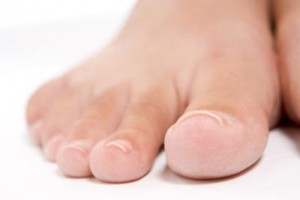
Ingrown toenails
Sometimes the terms “ingrown nail” and “deformed nail” are confused. This is incorrect, and even someone without medical training can usually distinguish between the two conditions. An ingrown nail may have a completely normal curvature of the nail plate but can still cause significant discomfort.
In addition to the aesthetic problem (especially on the foot), an ingrown toenail often causes pain while walking. A deformed nail, on the other hand, almost always has an abnormal pathological curvature. The most unpleasant aspect is that many deformed nails tend to eventually become ingrown, leading to the same discomfort as ingrown nails.
These conditions can arise due to a variety of causes, including genetic factors as well as external and internal influences.
Main causes of ingrown toenails:
External factors:
- Improperly selected footwear. For example, tight or small shoes create constant pressure on the toes. Shoes that are too large may cause repeated trauma to the toes as they hit the front of the shoe. Footwear without heels, completely flat shoes without proper support, and high platform shoes—often favored by fashion enthusiasts—can also be harmful.
- Compression or corrective tights.(!).
- Improper nail care (about 80% of cases). For example, cutting the nails too short or at an angle.
- Foot deformities, caused by congenital abnormalities, injuries, clubfoot, flat feet, toe deformities, and similar conditions.
- Congenital nail changes (dysplasia). Such as overly curved nails, hook-shaped nails, or tubular nails. Acquired changes may also occur due to nail dystrophy or, conversely, excess body weight.
- Metabolic disorders
- Self-medication with certain drugs without consulting a doctor
- Circulatory disorders
- Nail conditions such as onychogryphosis (ram’s horn nail), onychomycosis (nail fungus), and nail psoriasis
- Advanced age
- Hyperkeratosis (excessive thickening of the skin’s outer layer)
- Diabetes mellitus
- Hyperhidrosis (excessive sweating)
- Infection
- Certain pregnancy-related conditions
- Poor foot hygiene

Treatment of ingrown toenails
There are three main approaches to treating ingrown nails:
- Surgical treatment
More than 150 surgical techniques exist for treating ingrown toenails. One of the most effective and widely used procedures is the Emmert operation, known in our medical system as wedge resection of the nail plate. The procedure is performed on an outpatient basis under local anesthesia and is carried out by surgeons. - Conservative methods (Home Treatment)
These include non-surgical care methods that may help relieve symptoms and reduce inflammation in the early stages. - Orthonyxia methods
These methods involve treatment using corrective braces, plates, or other nail correction systems.
Orthonyxia – nail shape correction:
Orthonyxia (or onychorthonyxia) is the science of restoring the natural shape of the nail using various corrective systems.
The word originates from Greek:
Ortho — straight
Onyx — nail
This method was introduced by Scottish dentist Ross Fraser, who in the 1960s began applying orthodontic techniques used in dentistry (such as braces) to correct nail shape. He also introduced the term orthonyxia.
This approach helps patients avoid surgery and is often considered the last step before surgical intervention becomes necessary.
Treatment with braces reduces the pressure of the nail edges on the surrounding soft tissue by applying special correction systems attached to the nail. These braces also help correct deformities, allowing the nail to gradually return to its natural shape as it grows.
Orthonyxia methods are an excellent alternative to surgery.
The longer the nail correction process takes, the better the long-term results and the lower the recurrence rate. According to statistics, the recurrence rate with orthonyxia treatment is less than 1% (research by Jörg Harrer and Norbert Scholz, Germany, 1971–2002).
This method is very effective but requires patience. The average wearing time for corrective devices is 12–18 months or longer, and in some cases continuous use may be recommended.
Our clinic specialists have extensive experience in applying different correction systems, including:
- Fraser brace
- 3TO brace
- Onyclip plates
- B/S brace system
- Podo-fix system
We guarantee high-quality treatment and professional care.