
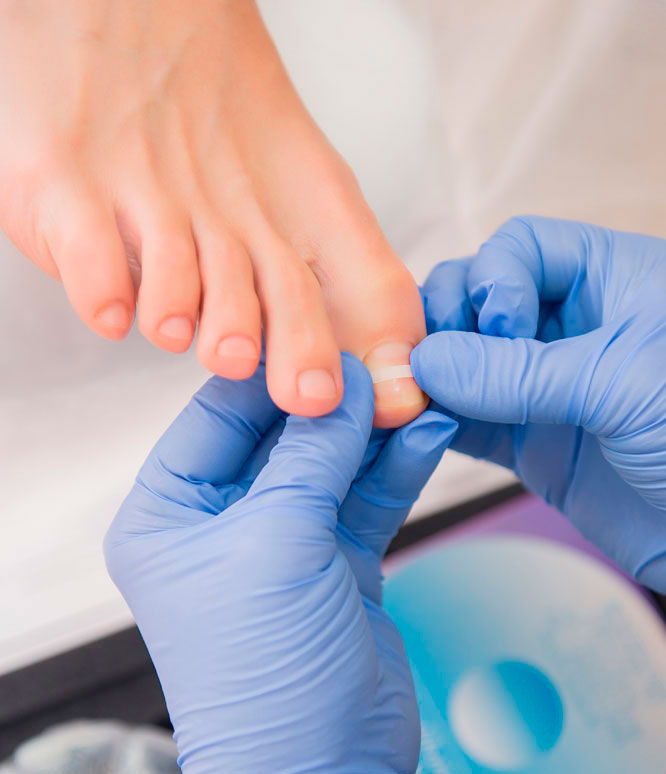
Nail prosthetics (Nail reconstruction)
Nail prosthetics refers to the placement of an artificial nail or part of it when the natural nail has a defect, as well as strengthening the nail plate using specialized materials.
Causes of nail plate damage:
Damage to the integrity of the nail plate may occur due to:
- Trauma
- Onychomycosis (nail fungus)
- Nail splitting or peeling
- Anatomical nail abnormalities (such as spoon-shaped nails)
- Ingrown nails
- Consequences of surgical procedures
- Longitudinal nail splitting (onychorrhexis) or transverse splitting (onychoschizia)
When nail reconstruction is needed
In many cases, nail reconstruction becomes necessary. Complete restoration of the nail is usually not possible because some part of the natural nail plate must remain to attach the prosthesis. Nevertheless, the term “complete nail prosthesis” is commonly used, even though the prosthesis usually replaces only about two-thirds of the nail.
The most common reason patients seek this treatment is the aesthetic appearance of the nail. However, nail dysfunction may also lead to painful complications over time, such as:
- Damage to the nail folds
- Ingrown nails accompanied by severe inflammation, often caused by incorrect toe positioning
- Complete destruction of the nail plate due to fungal infection
Changes most frequently occur in toenails, although fingernails can also be affected. Partial or complete nail reconstruction may be required for various nail disorders (onychodystrophy).
The term onychodystrophy refers to changes in the shape, color, or structure of the nail. These changes may be caused by:
- Diseases
- Injuries
- Certain medications
- Exposure to harmful substances
- Genetic factors
Nail reconstruction may be recommended in the following cases:
To protect the nail bed from keratinization and pressure
To protect the remaining natural nail
To protect the distal phalanx of the toe
To shape the lateral nail folds
In cases of longitudinal upward or downward nail curvature (Unguis inflexus)
To correct the direction of nail growth
When the nail is partially or completely missing after trauma
In cases of subungual corns
To restore the aesthetic appearance of the toe
Contraindications:
Nail prosthetics cannot be performed in the following situations:
Open wounds or damage to the nail bed (the wound must heal before prosthetic treatment can be considered)
Paronychia or acute purulent inflammation of the finger or toe
Active fungal infection of the nail (certain methods may be used in these cases, while others are not recommended)
Psoriasis
Ingrown nails
Severe transverse nail curvature (when the nail curls into a tube-like shape)
Allergy to certain prosthetic materials
Fingernails and toenails serve not only an aesthetic purpose but also protect the tips of the fingers and toes and support physical functions such as touch and grasping.
In many cases, unsightly nails may lead to social discomfort or isolation, as individuals may avoid social situations due to embarrassment. Therefore, nail reconstruction or prosthetics should not be viewed merely as a cosmetic procedure. From a social and functional perspective, it can be extremely important.
These procedures can help prevent further nail bed damage and promote healing of the affected area. Nail prostheses may also restore sensitivity in the fingertips and improve tactile perception (for the feet, tactile sensitivity is important for balance and spatial orientation).
Methods of nail reconstruction
Today, many different methods exist for repairing damaged nails and creating prosthetic nails. In each case, the method is chosen individually, depending on the complexity of the problem.
Some techniques are primarily used to restore the aesthetic appearance of the nail, while others may also support treatment of fungal infections, one of the most common causes of nail disorders.
At Estonian Foot Clinic, you can receive professional consultation regarding nail plate reconstruction and prosthetics. Our specialists will select the most suitable treatment method and perform the procedure.